Restoring Function
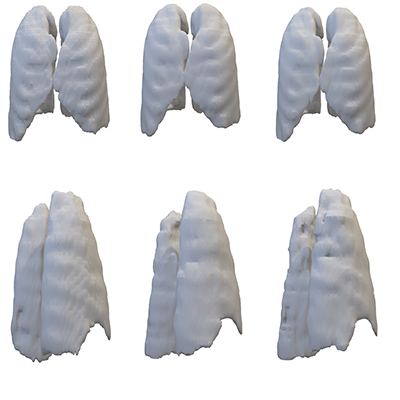
One ultimate ambition of digital-twin research is translational: using accurate models of neural and bodily function to restore what disease or injury has disrupted. We aim to develop machine-learning tools that can inform the design of neuronal prosthetics and adaptive rehabilitation strategies.
Contributors


Publications
2026
|
Stefan Schrod, Fabian Sinz, Michael Altenbuchinger
Adversarial Distribution Balancing for Counterfactual Reasoning
Machine Learning, 115(4):96
|
2024
|
Ann-Kathrin Schalkamp1, Stefanie Lerche1, Isabel Wurster, Benjamin Roeben, Milan Zimmermann, Franca Fries, Anna-Katharina von Thaler, Gerhard Eschweiler, Walter Maetzler, Daniela Berg, Fabian H. Sinz, Kathrin Brockmann
Machine learning-based personalized composite score dissects risk and protective factors for cognitive and motor function in older participants
Frontiers in Aging Neuroscience
, equal contribution: 1
|
|
Taesung Jung, Nanyu Zeng, Jason D. Fabbri, Guy Eichler, Zhe Li, Konstantin Willeke, Katie E. Wingel, Agrita Dubey, Rizwan Huq, Mohit Sharma, Yaoxing Hu, Girish Ramakrishnan, Kevin Tien, Paolo Mantovani, Abhinav Parihar, Heyu Yin, Denise Oswalt, Alexander Misdorp, Ilke Uguz, Tori Shinn, Gabrielle J. Rodriguez, Cate Nealley, Ian Gonzales, Michael Roukes, Jeffrey Knecht, Daniel Yoshor, Peter Canoll, Eleonora Spinazzi, Luca P. Carloni, Bijan Pesaran, Saumil Patel, Brett Youngerman, R. James Cotton, Andreas Tolias, Kenneth L. Shepard
Stable, chronic in-vivo recordings from a fully wireless subdural-contained 65,536-electrode brain-computer interface device
bioRxiv
|
2022
|
Pavithra Elumalai, Yasharth Yadav, Nitin Williams, Emil Saucan, Jürgen Jost, Areejit Samal
Graph Ricci curvatures reveal atypical functional connectivity in autism spectrum disorder
Nature Scientific Reports
|